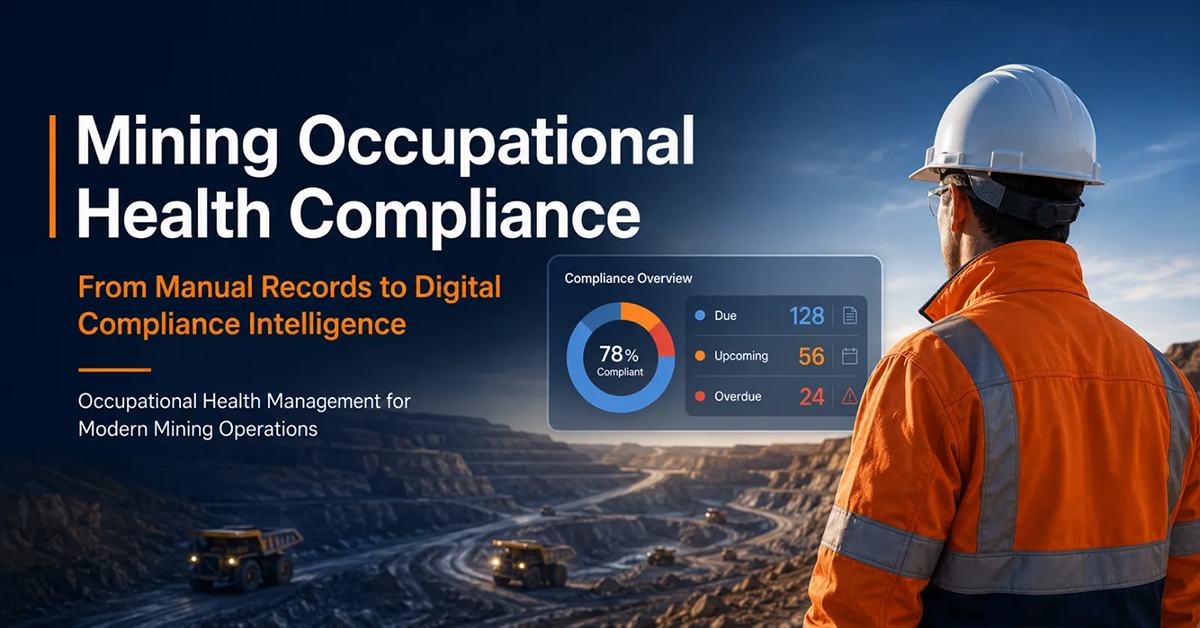
Can Your Organization Ensure Every Employee, Every Contract Worker and Every Medical Examination Remains Compliant, Traceable and Up to Date?
For mining organizations managing thousands of On-Roll Employees, Vendor Employees, Sub-Vendor Employees and Contract Labour across multiple mines and locations, Occupational Health Management is no longer just about conducting medical examinations. It is about maintaining a continuous, accurate and traceable occupational health compliance lifecycle for every worker.
For mining organizations, effective occupational health compliance depends on maintaining complete visibility, timely action and traceable records across the entire workforce:
- Every eligible worker is identified.
- Every required medical examination happens on time.
- Every fitness decision is traceable.
- Every occupational exposure record is maintained.
- Every statutory employee and medical record can be retrieved when required.
And management needs to know the compliance position before an inspection, audit or health incident identifies the gap.
That challenge has become more important under India’s new occupational safety and health framework.
Mining Occupational Health Compliance Has Changed
The Occupational Safety, Health and Working Conditions Code, 2020 came into force on 21 November 2025. The Occupational Safety, Health and Working Conditions (Central) Rules, 2026 were subsequently notified in May 2026 and superseded several earlier Central rules, including the Mines Rules, 1955. DGMS lists both the OSHWC Code and the 2026 Central Rules among the current mines safety and allied legislation it administers.
The Directorate General of Mines Safety (DGMS) functions as the enforcing agency under the Ministry of Labour and Employment for occupational safety, health and welfare of persons employed in mines and administers the OSHWC Code and subordinate legislation in relation to mining.
One of the most significant changes for occupational health management is the frequency and coverage of medical examination.
Rule 60 requires the employer of every mine to ensure medical examination of every employee employed or proposed to be employed in a mine, including contract labour, before commencement of employment and subsequently every year. It also requires contract labour to receive medical facilities at par with regular employees.
Rule 109 further provides for:
- Initial Medical Examination of persons seeking employment in a mine
- Periodical Medical Examination annually for persons employed in a mine
- and prescribes Form IX for the medical examination.
- This represents a significant shift from the earlier regime, under which periodical medical examinations were generally undertaken once in five years.
- For large mines, this means occupational health compliance has effectively become a continuous annual workforce-management cycle.
The Compliance Risk Goes Beyond Missing a Medical Examination
Under the OSHWC Code, 2020, Sections 96 and 99 provide penalty provisions for failures relating to the maintenance, production, filing or furnishing of prescribed registers, records, returns, notices, reports and other statutory information.
For mining organizations, this makes accurate recordkeeping, timely submission, medical examination tracking and audit-ready documentation an important compliance responsibility.
NTSPL OHMS helps organizations maintain structured employee and medical records, Form IX and Form XIII information, examination due-date alerts, historical records, audit trails and compliance dashboards in one connected digital platform.
This helps management identify gaps proactively, improve inspection readiness and reduce the risk of non-compliance arising from missing, delayed or fragmented records.
An Illustrative Case Study: The Hidden Risk Inside a Multi-Mine Operation
- Consider a hypothetical mining group operating several mines with:
- 5,000+ permanent and contract workers
- Multiple Vendors and Sub-Vendors
- Several Occupational Health Centres
- Different diagnostic laboratories
- Multiple HR and contractor-management teams
- Employee attendance captured through biometric systems
- Employee Master maintained in an HRMS
- Medical examination records maintained separately
- Physical and scanned statutory registers
- Excel-based medical due-date trackers
- Email and WhatsApp-based follow-ups
- At first, the system appears to work.
- Medical examinations are happening.
- Employee information exists.
- Reports are available.
- Spreadsheets are being updated.
But then senior management asks:
“How many employees are medically compliant today?”
- One spreadsheet says 4,700.
- Another list maintained by the Occupational Health Centre says 4,580.
- The HRMS employee count does not match the contractor register.
“How many medical examinations are due during the next 30 days?”
- Someone has to consolidate several Excel sheets manually.
“Which contractor has employees with overdue examinations?”
- The contractor-wise data is maintained separately.
“Can we see the complete occupational health history of Employee X?”
- The team searches the employee master, physical medical file, pathology reports, X-ray folder and previous examination record.
“What was the employee’s previous occupational exposure and fitness status?”
- That information is available, but not necessarily in one place.
- Nothing may be fundamentally wrong with any individual system.
The problem is that the information is fragmented.
And fragmented compliance information creates operational blind spots.
Seven Risks Hidden Inside Manual Occupational Health Management
1. Medical Examination Due Dates Can Be Missed
- When thousands of examination dates are tracked manually, compliance becomes dependent on spreadsheet accuracy and individual follow-up.
- A worker may be transferred.
- A contractor may change.
- An employee record may not be updated.
- A due date may simply be overlooked.
- The organization often discovers the exception only after it has become overdue.
2. Contract Labour Multiplies the Complexity
- Rule 60 expressly includes contract labour within the medical examination requirement.
- Mining companies therefore need visibility not only over their own employees but also Vendor and Sub-Vendor workforces.
- When contractor records remain disconnected from Occupational Health Centre records, knowing the actual compliance position becomes difficult.
3. Manual KYC Entry Creates Data Quality Risk
- Employee details may be repeatedly typed from Aadhaar, PAN, bank documents and other KYC records.
- Duplicate employee records
- Incorrect employee mapping
- Wrong statutory information
- Mismatch between HR and medical records
- Additional verification effort
- The larger the workforce, the greater the cumulative administrative burden.
4. Medical Records Become Scattered
An employee’s health record can include:
- Medical examination forms
- Pathology reports
- Audiometry
- Spirometry
- Chest X-ray
- ECG
- Vision examination
- Medical certificates
- Specialist opinion
- Fitness assessment
- Occupational exposure information
- Re-examination history
- When these exist in different folders, systems and physical files, retrieving the complete occupational health history becomes difficult.
5. Form XIII and Form IX Remain Disconnected
- Form XIII relates to the Employee Register, while Form IX captures medical examination information for mine employees.
- If employee identity, employment details and medical examination history remain in separate systems, the organization loses the ability to view the employee as one continuous compliance record.
- Rule 72 requires an Employee Register in Form XIII and expressly permits prescribed registers to be maintained electronically or otherwise. It also requires registers and records to be produced on demand and retained for the prescribed period.
6. Historical Occupational Health Records Matter
- Rule 114 requires medical examination records containing medical history and job details sufficient to depict occupational dust exposure profiles to be retained while the person remains employed in the mine and for five years thereafter.
- Rule 113 also provides for copies of the Form IX medical certificate to be transmitted electronically to the employer.
- For a large organization, years of medical examination cycles can create an enormous volume of health information.
- A physical filing model may store it.
- A digital occupational health system should make it searchable, connected and actionable.
7. Compliance Becomes Reactive
Perhaps the biggest manual-process risk is this:
- Management often discovers what is missing only when somebody asks for it.
- An inspection approaches.
- An internal audit begins.
- A Medical Officer needs historical information.
- A contractor record does not match.
- A worker’s previous report cannot immediately be found.
- Then multiple teams start searching for information.
- That is reactive compliance.
- Modern occupational health management should be proactive.
The Transformation: NTSPL Occupational Health Management System
NTSPL Occupational Health Management System (OHMS) is designed to transform fragmented occupational health processes into a centralised, connected and traceable digital ecosystem.
The objective is not simply:
- Paper → PDF
or
- Register → Excel
The objective is to connect:
Employee Identity + Employee Master + Medical Examination + Fitness + Occupational Exposure + Statutory Records + Alerts + Analytics
into one occupational health environment.
Stage 1: Start with Accurate Employee Onboarding
NTSPL OHMS can support structured onboarding for:
- On-Roll Employees
- Vendor Employees
- Sub-Vendor Employees
- Contract Labour
e-KYC verification can be incorporated into the employee onboarding workflow so that accurate identity information becomes the foundation for subsequent occupational health processes.
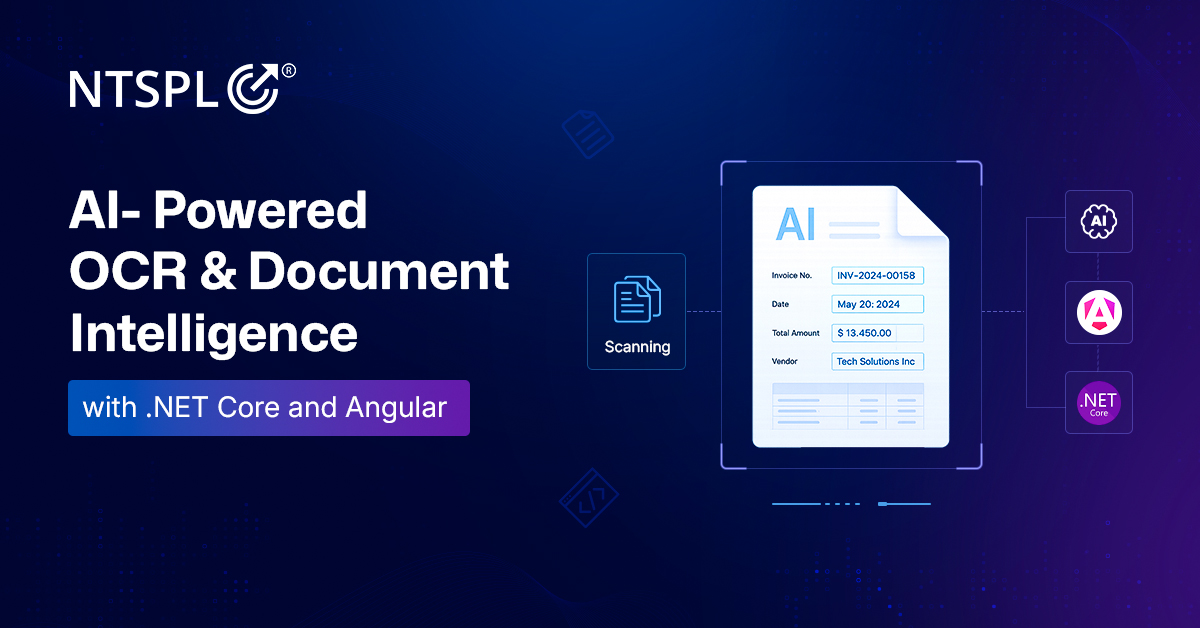
Stage 2: Use OCR & AI to Reduce Manual Data Entry
Instead of repeatedly typing information from employee documents, NTSPL OHMS can utilise OCR and AI-assisted document extraction to identify relevant information from supported documents and map it into application records.
Traditional Process
Document Received → Manual Reading → Manual Typing → Manual Verification → Correction → Employee Record
Digital Process
Document Upload → OCR & AI Extraction → Structured Data → Human Validation → Employee Record
The purpose is not to eliminate human oversight. It is to eliminate unnecessary repetitive data entry and reduce transcription errors. This can contribute to:
- Faster onboarding
- Improved Employee Master quality
- Reduced duplicate information
- Reduced manual effort
- More consistent employee records
Stage 3: Integrate Instead of Creating Another Data Silo
Large mining organization may already operate enterprise HRMS platforms. NTSPL OHMS can be configured for integration with existing HR systems such as:
- Darwinbox
- SAP SuccessFactors
- Other Enterprise HRMS Platforms
- Integration with Biometric System
Employee Master information can therefore be synchronised according to the organization’s integration architecture instead of being recreated manually.
Supported biometric attendance systems can also be integrated to obtain relevant attendance and workforce data.
The digital flow can become:
HRMS → Employee Master → Biometric / Workforce Data → OHMS → Compliance
This creates an ecosystem rather than another standalone application.
Stage 4: Digitise Form XIII Employee Information
Once the employee identity and Employee Master are established, NTSPL OHMS can maintain the structured information required for the employee register workflow. Relevant information can include:
- Employee Code
- Personal Details
- Designation and Skill Category
- Employment Type
- Vendor / Contractor Information
- Posting and Location
- Joining and Exit Details
- UAN
- ESIC Information
- Identification Information
- Contact and Address
- Nominee and Family Information
- Bank Details
- Employment History
The key value is not simply maintaining Form XIII electronically. It is that the employee record can remain connected with the employee’s occupational health journey.
Stage 5: Digitize the Form IX Medical Examination Lifecycle
NTSPL OHMS can digitally manage the mine employee medical examination process including:
- Initial Medical Examination
- Periodical Medical Examination
- Automated Medical Examination Due-Date Alerts
- Upcoming and Overdue Examination Tracking
- Diagnostic and Pathology Records
- Vision and Colour-Vision Records
- Audiometry
- Chest X-ray
- Spirometry / Lung Function Tests
- ECG and Other Investigations
- Occupational Exposure History
- Doctor Review
- Fitness Assessment
- Fit / Temporarily Unfit / Unfit Status
- Medical Reports and Certificates
- Historical Health Comparison
- Audit Trail
Now management moves from asking:
“Where is the employee’s medical report?”
to asking:
“What action does this employee require next?”
That is a fundamental change.
Stage 6: Connect Relevant Compliance Workflows up to Form XIII
NTSPL OHMS can provide a connected environment supporting relevant statutory workflows including:
- Form IX — Report of Medical Examination for Mine Employees
- Form X — Medical Re-examination by the Appellate Medical Board
- Form XI — Accident and Dangerous Occurrence
- Form XII — Periods of Work
- Form XIII — Employee Register
Rather than five independent records, the objective is a connected compliance ecosystem around the employee and workforce.
One Employee. One Connected Occupational Health Journey.
The transformed employee lifecycle can look like:
HRMS / Employee Onboarding
↓
e-KYC Verification
↓
OCR & AI-Assisted Data Extraction
↓
Employee Master
↓
↓
Initial Medical Examination
↓
Form IX Medical Record
↓
Diagnostic & Pathology Records
↓
Fitness Assessment
↓
Occupational Exposure Tracking
↓
Periodical Medical Examination
↓
Historical Health Comparison
↓
Automated Compliance Alerts
↓
Management Dashboard
Instead of multiple records describing the same person, the organization builds one traceable occupational health journey for every employee and contract worker.
Before vs After: The Business Transformation
Manual Occupational Health Management |
NTSPL OHMS |
| Multiple spreadsheets | Centralised digital environment |
| Physical employee registers | Digital employee records |
| Repeated employee data entry | HRMS integration |
| Manual KYC processing | e-KYC enabled onboarding |
| Manual document reading | OCR & AI-assisted extraction |
| Manual examination reminders | Automated due-date alerts |
| Scattered diagnostic reports | Employee-wise medical repository |
| Separate Form IX and Employee Master | Connected employee health journey |
| Difficult contractor monitoring | Vendor and Sub-Vendor visibility |
| Manual compliance consolidation | Management dashboards |
| Reactive inspection preparation | Proactive compliance monitoring |
| Limited historical comparison | Longitudinal medical history |
| One-size-fits-all software | Customizable workflows and integrations |
What Does the ROI Look Like?
The ROI of an Occupational Health Management System should not be calculated only by the amount of paper removed.
The bigger returns come from risk reduction, productivity, data accuracy, compliance visibility and better utilisation of human resources.
1. Lower Administrative Effort
HR, contractor-management and medical teams spend less time re-entering, searching and reconciling information.
2. Faster Employee and Contractor Onboarding
e-KYC, OCR and AI-assisted document processing can reduce repetitive document-handling effort.
3. Better Data Quality
Integration and structured validation can reduce transcription errors and inconsistent employee information.
4. Fewer Medical Examination Backlogs
Automated due-date tracking can help teams act before upcoming examinations become overdue cases.
5. Better Occupational Health Centre Productivity
Medical teams spend less time searching for records and more time on actual occupational health activities.
6. Stronger Contractor Governance
Vendor-wise and Sub-Vendor-wise visibility enables management to identify compliance gaps in contract workforces more effectively.
7. Faster Audit and Inspection Readiness
Structured and searchable information reduces dependence on emergency data collection across multiple departments.
8. Better Management Visibility
Dashboards can provide authorised decision-makers with visibility into:
- Total Workforce
- Medical Examination Compliance
- Upcoming Medical Examinations
- Overdue Cases
- Fitness Status
- Mine-Wise Compliance
- Location-Wise Compliance
- Contractor-Wise Compliance
- Occupational Health Trends
- Management MIS
These efficiency and visibility benefits are core elements of the current NTSPL OHMS proposition.
Fully Customizable for Enterprise Mining Operations
Every mining organization has its own workforce structure, medical workflows, approval hierarchy, reporting needs and integration environment.
NTSPL OHMS is a fully customizable enterprise application that can be configured to align with your organization’s:
- Employee and contractor workflows
- Occupational Health Centre processes
- Approval and escalation hierarchy
- Mine and location structure
- MIS and dashboard requirements
- Role-based access
- HRMS, biometric and other system integrations
This flexibility helps NTSPL OHMS fit into existing operational processes rather than forcing organizations to adopt a rigid standard workflow.
The Case-Study Outcome: From “Do We Have the Record?” to “What Requires Action?”
With a connected Occupational Health Management System, management no longer needs to depend on multiple teams for basic compliance information.
Instead of asking:
“Is this employee’s medical examination pending?”
Management can instantly view Due, Upcoming or Overdue status.
“Where is the previous medical report?”
Authorized users can access the employee’s historical health record.
“Which contractor has pending cases?”
The system provides contractor-wise compliance visibility.
“Can we prepare the latest compliance status?”
Dashboards provide a current management view.
The result is a shift from manual searching and reactive follow-up to faster, data-driven compliance action.
Ready to Evaluate Your Current Occupational Health Process?
If your organization still relies on spreadsheets, physical medical files and manual follow-ups to manage a large mining workforce, NTSPL can demonstrate how the same process can be redesigned through a connected digital OHMS environment.
Schedule a Live Demo of NTSPL Occupational Health Management System
Phone: +91 8260003333
Email: info@ntspl.co.in
Explore NTSPL OHMS: ohms.ntspl.co.in